Here's the deal folks. in an effort to consolidate my "internet life" I have decided to consolidate things under the umbrella of BusanKevin Dot Com. I have started posting the videos from my BusanKevin YouTube channel there as well as new written blog posts. I will soon move all of my posts from this site over there.
I will no longer be posting here so if you want to keep reading the strange things I write...come on over to BUSANKEVIN DOT COM and "Like" the site or sign up for my BusanKevin email list (the tab i on the site).
Love yas and see yas over there :)
Kevin
Showing posts with label jlandkev. Show all posts
Showing posts with label jlandkev. Show all posts
Saturday, September 14, 2013

Monday, August 26, 2013
Teaching in Japan as a Non-Native English Speaker
There seems to be a myth going around that if you are a
foreigner who wants to work in Japan as an English teacher that you must be a
native English speaker (English is the your first language). Although that
may be true in a country such as South Korea, it couldn’t be more wrong in
Japan.
I spent several years working in South Korea in the
education sector and in order to get a valid working visa to be a teacher you
had to be either from Canada, America, England, Ireland, Australia, New Zealand
or South Africa. You had to have received your university degree from an
accredited English university as well. I have met some Canadians who were not
able to get a job teaching in Korea because they went to a French language
university.
In Japan, the rules aren’t as demanding. I’m not really sure
why this is the case. Maybe Japan has been open to foreigners working as
teachers for a longer period of time. Maybe officials realize that non-native
speakers can teach English just as well if not better than many native English speakers. I really don’t know.
Over the years, people from various
countries around the world have been emailing me and asking me if it is
possible for them to teach in Japan even though English is not their first
language. The answer I give them is “YES.” In my years in Japan I have worked
with a large number of teachers from a wide variety of countries. Many of them
have not been native English speakers. I have had coworkers who taught English from
India, Pakistan, Sweden, Philippines, Turkey, Kyrgyzstan, Russia, Spain,
France, Malaysia, Singapore, China and Brazil. Many of them were fine teachers.

Many people around the world have a profound interest in
Japan. Some love Japan for the food and language. Others are more interested in
the pop culture; things such as manga and anime. Some are attracted to the
fashion and cool and fast-paced life in a city like Tokyo. Many are interested
and want to come to Japan to work and live. Some of those people see the route
of becoming an English teacher as an effective path in getting here.
In order to teach English in Japan and qualify for either an
Instructor’s Visa (needed to teach in public schools, colleges and
universities) or a Specialist in Humanities and International Relations Visa
(needed to teach in private language schools and kindergartens), you need a
completed university degree (one or two year diplomas/Associates Degrees don’t
count) and a very strong grasp of spoken and written English. If you have those
qualifications, there’s nothing stopping your from trying to get a job as a
teacher in Japan.
Long story short, if you are not from a native English
speaking country, don’t let that stop you from trying to come to Japan if you
are really interested.
You can follow me on Twitter: @jlandkev
Friday, August 23, 2013
5 Scariest Bugs in Japan
Scariest Insects in
Japan
My Top 5 List (I realize that not all are "technically" bugs)
Recently I was asked a question on my YouTube Facebook page
about creepy crawly things. Someone who plans to move to Japan shared with me
that they are very frightened of spiders and fear they may have an allergy. They
wondered if there are many spiders one should fear in Japan.
I think most adults I come across in Japan have a fear of
bugs to some extent. When I talk about adults, I am of course referring to both
Japanese and non-Japanese. Often that fear seems pretty irrational.
Many people
tell me they don’t like insects simply because of the way they look. Also, for
many of these “bug haters” there must have been some sort of change in attitude
during their lives. I say that because most children I meet like bugs. Catching
cicadas, grasshoppers and mantises is one of the most popular summertime
hobbies of Japanese children. At some point though, many turn from bug fans to
bug fearers!
I am a self-described insect fan. I have been teaching my
son not to fear, but enjoy insects. At the same time however, I do realize that
there are some dangerous insects in Japan. There are some bugs that no one
should touch. I have also been trying to teach my son that as well.
Here is a short list and a little information about some of
the most dangerous and freaky insects in Japan (in no particular order):
Japanese Giant Hornet
(Suzumebachi):
Found throughout Japan, the giant hornet can be up to 4cm
long with a wingspan of 6cm. These are very powerful and aggressive creatures.
Pretty much at the top of the food chain in Japan, preying upon almost any
other insect out there. In Japan they are known as the osuzumaebachi, which
literally translates to “giant sparrow bee.” Although they can be found in
cities, they are most commonly found in rural areas.

The giant hornets dismember their victims with their
powerful jaws. It is said that their saliva and venom have the ability to
dissolve flesh. Their venom is extremely powerful and is injected through a
quarter inch stinger. Their sting is extremely painful and requires hospital
treatment. They are considered the most dangerous animal in Japan with more
than 40 people dying each year of anaphylactic shock after having been stung.
Bears kill 0-5 and venomous snakes only about 10 per year.
Japanese Centipede
(Mukade)

These fairly reclusive creatures tend to stay in dark, damp
places. They can grow up to 20cm in length and are extremely quick and nimble
creatures. They are certainly horrifying in appearance when full-grown and are
venomous. Bites from a large Japanese centipede are very painful and may cause
swelling, weakness or fever. Their bites are normally not fatal, but some
people do have allergies to centipede venom.
Assassin Bug
(Sashigame)
Assassin bugs can be found in many parts of Japan. They tend
to slowly move around on trees and are capable of a clumsy style of flight.
Although they seem to normally move slowly, they can quickly strike at their
prey.

They use a long “rostrum” (injector) to inject a lethal
saliva that liquefies the insides of the prey, which are then sucked out. The
saliva contains enzymes that predigest the tissues they swallow. This is very
effective when attacking prey that are much larger than the bug itself.
A bite from this relatively small bug can be extremely
painful, especially for a child. Although not extremely dangerous to humans,
their bite will cause pain and swelling (a really big ouchie).
Caterpillars –
various types (Kemushi)
A wide variety of moth and butterfly caterpillars throughout
Japan can cause great discomfort if touched. Many have long barbed hairs with
mild venom as a defense against predators such as birds and other insects.

If a caterpillar has long hair, bright colors or both, it’s
a good rule of thumb to not touch. It can be difficult to remove all of the
barbed hairs from one’s skin and the venom cause pain and itching.
At certain times of year, mainly spring, various types of
caterpillars fall out of trees on the ground. This can sometimes be treacherous
for hikers trudging through the woods. I have had friends who have suddenly
felt pain and realized a caterpillar fell down the neck of their shirt or on
their shoulder.
Huntsman Spider (Ashidaka-gumo
)
The Huntsman gets its name from its speed and the way it
hunts. They are also sometimes known as crab spiders because of their size and
shape. They tend to prefer living in woody places such as the forest, woodpiles
and wooden shacks and buildings. They also can live under rocks and large
pieces of tree bark.

Full-grown male spiders can have a diameter (legs) of 10-12
inches, about the size of a dinner plate. Some people confuse them with
tarantulas because of their appearance.
The Hunstman spider does have venom that it uses to
immobilize its prey. They have been known to inflict defensive bites that are
quite painful and lead to swelling, but their venom is not normally considered
dangerous to healthy humans. They are often considered beneficial since they
feed on insect pests such as cockroaches.
So there you have it. Not all of these are technically insects
(six legs, 3 body parts – abdomen, thorax and head – 2 antennae), but they fit into
the “creepy crawly” zone nonetheless.
You can follow me on Twitter: @jlandkev
Monday, August 12, 2013
Raising a Bilingual Child: Code Switching
Code Switching - Up close and personal
I have to admit that watching my son’s language development
is absolutely amazing. I grew up in “one language” household. My family used
English. Now, my family in Japan uses both English in the house and outside as
well.
My son is now a newly minted 3 year-old. As I’ve mentioned
before, his first language is Japanese and his second language is English. His speaking skills are quite high and
it is clear that he can communicate much more fluently in Japanese, but what I
have noticed recently is the dramatic increase in his code-switching skills.
In linguistics, code switching is switching between two or
more language varieties, in the context of a single conversation.
When my son was only one year old he started conversing in
both English and Japanese with family and friends. At that point he didn’t
realize that there was a difference between the two languages he was learning. He
would speak to his little friends in a mixture of English and Japanese and they
would just look at him blankly. Their Japanese skills were also just emerging,
but of course, they didn’t understand any English. Not long after he was two
years old, a switch in his brain was flipped and he realized that when he was
at the local kindergarten, community center or playground with his friends and
their mothers, he should only speak Japanese.
The most basic and obvious examples of code switching with
my son are in the home when he interacts with his mother, who is Japanese and
myself. When I come home from wok in the evening, he runs down the hall yelling
“Hello Daddy” and then he commences to tell me about his day’s adventures in
English. When I respond to him in English, he runs back down the hall and tells
my wife what I just said, but in Japanese.
At the dinner table he sits at the end and we sit on either
side of him. The majority of his day is spent “living in Japanese” so when I
come home my wife and I speak English to each other and to my son (and now
daughter). We haven’t set an “English Only” rule in our house that some other
people do. We just tend to use English because my Japanese skills are not
strong. Also, even though I am currently learning Japanese, I choose not to use
it around my son since his only daily opportunities to hear natural English are
with me.

Our normal dinner experiences are in English. At times
though, my son will tell me a story in English and then immediately turn to his
mother and repeat the story in Japanese. Other times, he will share it with her
in English.
Watching his code switching skills evolve is a constant and
wonderful process.
You can follow me on Twitter: @jlandkev
Wednesday, July 31, 2013
Walking Away from the Not So Good
Change can be a scary thing at times. Other times it can be
en extremely good thing. Sometimes change is a very necessary thing.
I have been through many changes so far this year. Some have
been wonderful; the birth of my second child; some have not been o wonderful.
Employment-wise, this has been a rocky year for me. I have been
in Japan, living and working as an international school teacher since 2008. Earlier
this year I completed my final contract with the only employer I knew since coming
to Japan. They wanted me to stay on and continue working there, but I felt it
was time for a change. I needed a change and wanted to break away from the secure
and somewhat predictable existence that had become my work life there.
I searched for jobs online and realized a few things (things
I had actually realized long before). The two things I learned:
1. There are not so many jobs for teachers in Japan.
2. The pay schools offer teachers really sucks!
The standard par for a language school teacher or international
kindergarten teacher in Japan is only about 250,000Yen per month. With current
exchange rates, that adds up to about $31,000 per year. By Canadian standards,
with a family my size living in a city as large as the one I do, that’s about
$6000.00 below the poverty line according to Statistic’s Canada. Some teaching
jobs in Japan pay even less than that. If I were teaching in Canada right now (with
my years experience), I’d be making more than double that salary.

I was able to find a new job quickly (benefit of having a teaching
credential) and was promised a lot. The pay was to be decent and there were to
be other perks. Once I began working at my new company I quickly realized that
many of the things promised to me during the interview and contract signing process
were fabrications. I also quickly learned that things weren’t going to change for
me.
I suppose I really only had two options. I could do things the
Japanese way and just suck it up and complete my year contract or I could doing
something bolder and make a change. I decided to do the latter. There’s no point
in putting your blood, sweat and tears into a job when you’re not receiving the
things promised; even more so, when you have a family to support.
My wife and I searched for another opportunity. I focused on
jobs in Canada (really hard to get one when you are not in Canada I discovered)
and she looked for ones in Japan. She came across what looked to be a good opportunity
for me.
I pursued it and…SUCCESS!
I found a new job and then gave my notice at the company that
had “promised” me so much.
Today is my last day of work at my old company and tomorrow I
start a new and exciting challenge. Things will be very different. I will have
more pay, shorter working hours, less responsibility and more time to work on
improving my Japanese.
Today is a good day.
Tomorrow will be an even better day I think.
Someday, when I am no longer living in Japan, I will tell
you about this in more detail.
Follow me on Twitter: @jlandkev
Monday, January 14, 2013
Constantly Talking: a teaching tool
One piece of advice I give to new teachers, especially ones
teaching second language learners is to constantly speak to them and ask them
questions. This of course gives them more opportunities to hear English as well
think in the language and speak it.
Practice, practice, practice!
The more you practice anything,
the better you will become. Learning a language is no different.
This of course carries over to parenting and raising a child
to speak more than one language. I suppose it will even help a child who is learning
only one language.
When my son was an infant, I read in a book about raising
children that I should have a constant running dialogue when I am with them. Even
when he was too young to speak or communicate in any way, aside from crying, I
should speak. At bath time, the running dialogue might sound something like, “Now
I’m going to wash your arms. I’m cleaning your arms with soap. Isn’t the water
nice and warm? Now I’m rinsing the soap off your arms. Does that feel nice?”

It completely makes sense why this would be good for your
child. While they are with you they hear your voice and are surrounded by the language
they will someday speak. It’s another form of mental stimulation. Sounds straightforward
and easy, but I often find this type of running dialogue difficult to maintain.
I suppose it is a little mentally taxing for me and sometimes I simply forgot
to do it.
When my son was younger and even now I find myself zoning out
when I am doing something that required concentration such as giving him a bath.
When I would zone out, I would stop speaking.
Today I went for a walk with my son and spoke to him the entire
time. I asked him questions about the vehicles we saw as well as the plants and
flowers we walked past. “Is that a white or a blue car? Look at the ambulance.
Is it loud? Did you see all of the pink flowers on the tree? Do you want to go
to the supermarket? What kind of juice do you want?”
I realize that English is my son’s second language and I need
to pick up my game and start exposing him to more of it.
I have to admit that while I need to pick up my game as a teacher
at home, my wife has been doing a fantastic job all along. She has that constant
dialogue with my son and speaks to him in both Japanese and English.
Another thing we have been doing all along, but more now that
our son is speaking a lot is discussing his “linguistic future.” We spend a great
deal of time talking about how we can work together to make sure his English skills
are strong. We have been discussing what type of schools he should attend. We
have also been discussing how we will teach him to read and write English if he
attends a Japanese school.
Luckily I’m not stressed about that since I have been teaching
of many years and have spent the last 5 years teaching young children phonics
and writing.
Interesting times!
More updates and ideas to come.
You can follow me on Twitter: @jlandkev
Thursday, January 3, 2013
10 Worst Things About Japan
Yesterday I brought you a post about the 10 best things
about living in Japan in 2012…for me.
Today I bring you the 10 worst things about life for me in
Japan in 2012.
As I mentioned in yesterday’s post, this is a tongue-in-cheek (that means humorous) post so if you get upset about it, you have full permission to close this browser window
and never read my blog again! Again…full permission…please…don’t come back!
Ok, now on with the list. 10 Things that didn’t make me very
happy about living in Japan in 2012:
1. Earthquakes: Does anyone really like these things? (That’s a
rhetorical question)
2. Really crowded trains: I have to commute to work and there’s
nothing more disgusting than having to wedge into a train that smells of body
odor and in the mornings, old booze (no matter what day of the week).

3. Expensive beer: It costs a lot of money to buy the stuff at
bars, restaurants and eateries.

4. People who live in tiny apartments yet have large dogs: It’s
pretty common around where I live and it’s just mean. A Golden Retriever or
Siberian Husky is meant to run in wide-open spaces, not live in a one or two
room apartment in a big city. It’s just mean!
5. Subway Restaurants: Nice to have a little taste of home, but
have you had one? They TOTALLY skimp on the meat. MORE MEAT PLEASE!

6. Only one-way to skin a cat: In English, the saying, “There’s
more than one way to skin a cat” of course means that there is always more than
one-way to solve a problem. From my experience, for many in Japan there is only
one way to skin a cat and if that doesn’t work…uh oh! No one seems to know what
to do. Oh yes…they get stressed and panic!

7. Train pervs: So many of them in Japan and they all deserve
to have their groping hands removed with a rusty butter knife!
8. Intentional pigeon-toed walking: A very common thing in Japan.
Many high school aged girls and young women walk very pigeon toed (that’s when
you walk with your toes pointing inwards). It looks strange, awkward and uncoordinated.
Apparently, most do it on purpose because they think it looks cute.

9. YouTube Japan: I’ve been a YouTube partner since the early days.
Once upon a day they supported all partners. Now they tell foreign partners straight
up that they are no longer important…we don’t care about you and will not really
help you!
10. I wasn’t “Lost in Translation”: Suppose I’ve been living in
Asia too long for that. I do at times need a translator though!

You can follow me on Twitter @jlandkev.
Wednesday, January 2, 2013
10 Best Things About Japan
As I look back at the year that was 2012, I want to reflect
on the best and worst things about Japan, the country I have called home for
the past 5 years. Today’s post will be the “10 Best” list while tomorrow’s will
be the “10 Worst” list.
Message to all “hardcore” Japan fans out there…take these
posts with a grain of salt!
1. Japanese food: It’s great. It’s really delicious!

2. Strong Yen (currency): At least in 2012 it was. That was
good for me since I was paid in Yen!

3. Safe place to live: I know that every second joker isn’t
carrying a gun!
4. SOOOO many weirdos: There really is a freaky amount of
freaky people all over the place in Japanese cities. As a blogger and vlogger,
that’s great for me! Free entertainment.

5. Beautiful women everywhere: I may be happily married, but
I’m not dead!
6. Those beautiful women are “Pro Short Skirt”: Nuff said…

7. Smart phones still have unlimited data plans: Nuff said…
8. Treated well as a foreigner: As a Canadian living in Japan,
I am treated quite well by most (sadly there are foreigners from many other
countries who aren’t treated so well).
9. Fantastic history: Japan has a really fascinating history. I
mean come on, these guys are the guys who brought us ninjas!!! That’s WAY cool!

10. Raising a family: As a parent in Japan, you have subsidized
health care and good financial incentives and support from the government…for
now.
Stay tuned tomorrow for my “10 Worst Things About Japan” list!
You can follow me on Twitter: @jlandkev
Tuesday, January 1, 2013
A Fresh Start
2012 is finished and the new year has begun. Hello 2013.
2012 was a year of challenges and small triumphs as well. The biggest milestone for me creatively was completing my first book, "Teaching in Asia: Tales and the Real Deal." I learned a lot about the writing and editing process while penning my first self-published work. I know what I will do differently the next time and how I can make future works much better. I was proud to finish my book and at the same time happy to learn how I could improve my writing and editing process.
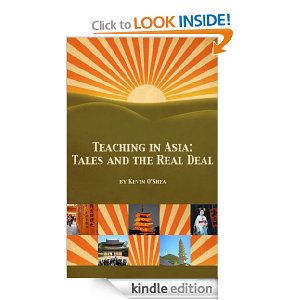
2012 was a year of challenges and small triumphs as well. The biggest milestone for me creatively was completing my first book, "Teaching in Asia: Tales and the Real Deal." I learned a lot about the writing and editing process while penning my first self-published work. I know what I will do differently the next time and how I can make future works much better. I was proud to finish my book and at the same time happy to learn how I could improve my writing and editing process.
I am happy to say that there will be a new book in 2013. I have already begun putting it together. This one will involve a lot of time interviewing people and gathering anecdotal data and stories. This one won't be about teaching in Asia, but in a way will be about teaching. If you have been reading the last few posts here on the "Far Away Blog" you might already have an idea about the topic.
As far as other creative endeavours have gone, I have continued to be active on my YouTube channels and have met some great people through my hobby. In 2013, I plan to continue with my fun video making hobby and hopefully bring it up a few notches.
I can inform all you fine readers out there, if you don't already know, that I will become a father again in 2013. In late spring my wife and I are expecting "little person" number TWO! Exciting and interesting times for sure.
Thank you for taking the time to stop by this blog in 2012 and if you re new to it, welcome.
I hope you all have a safe and happy 2013 and a productive year as well.
You can follow me on Twitter @jlandkev
Watching Television to Learn a Language
Many people will say that the best way to learn a language
is to immerse them in it and interact on a daily basis with native speakers of
that language. I can’t argue that that is probably the best way to do it, but
how do you learn a language when that ideal situation isn’t an option?
I live in Japan. You may have already figured that out if
you have read any of my previous posts. I live in Japan and I am trying to
raise my son to be fluent in both Japanese and English. The Japanese part is
easy. He lives in Japan and everywhere he goes he hears Japanese. Every time he
sees television it is Japanese.
Now, what do we do about his English? I leave for work about
30 minutes after he wakes up each morning and normally I am running around like
a chicken with its head cut off getting ready to go to work. I have very little
time to sit and interact with him linguistically. After work, I get home
between 6-7:00pm. He normally goes to bed shortly after 8:00pm. This doesn’t really
leave me with a lot of time to talk to him. I do as much as I can and try to
read a story or two to him before bed time, but realistically, he only gets about
2 hours of English each weekday.

To supplement things, I do what many parents in my situation
do. I have him watch television. It isn’t the best way, but it is one of the
few options I have and it works. I know it works because he has been learning
vocabulary and phrases that I didn’t teach him.
My wife teaches him some English throughout the day, but he
picks up idiomatic English from various DVDs he has and is able to apply that
English correctly when playing or interacting with me.
We of course want our son to lead an active life and be
outside as much as possible so we do limit the amount of time he spends indoors
watching television. On a daily basis, he probably watches about 1 to 1.5 hours
of English programming.
Again, it is the best we can do in the current situation.
Some of the shows that my son seems to really react to and
enjoy the most are:
Thomas and Friends (my son is OBSESSED with all things
Thomas)
Dora the Explorer
Go Diego Go
Theodore Tugboat
Blues Clues
His favorite movies are:
Wiggles Music DVDs (songs)
Toy Story
Cars
Wiggles Magical Adventure
You can follow me on Twitter @jlandkev
Sunday, August 26, 2012
Weird Japan: Goya Dry Beer?
Japan is a country known for many things, one of them being strange beverages. Every summer, Pepsi comes out with weird and occasionally wonderful limited time flavours. Breweries make limited time beers and a walk through any convenience store in Japan will leaving you happy and confused while looking at the overall beverage selection.
A few days ago I wandered into a Lawson convenience store here in Kobe and was shocked to see Goya Beer on the shelve. Goya or "bitter melon" in English, is an extremely bitter vegetable that I am not particularly fond of, is used to give the beer a bitter edge.
I chose not to buy the beer. if you dislike goya as much as I do, you probably would have as well.

A few days ago I wandered into a Lawson convenience store here in Kobe and was shocked to see Goya Beer on the shelve. Goya or "bitter melon" in English, is an extremely bitter vegetable that I am not particularly fond of, is used to give the beer a bitter edge.
I chose not to buy the beer. if you dislike goya as much as I do, you probably would have as well.

Since I didn't buy a can, I can't tell you how it tastes. I do however have a coworker who fancies himself a "beer afficiando" and he said it "Tastes like barf!"
If you are wondering, Goya Dry is made by Helios Distillery Co. in Okinawa, Japan.
You can find me on Twitter: @jlandkev
Monday, August 13, 2012
Pepsi Salty Watermelon and Dwarves
Although I tend to find that serious and somewhat controversial topics (or at least ones I am very honest about) get the most views on this blog, sometimes I just have to keep it light and fun. I can't always be serious.
Here are two videos I have made in 2012 about two very odd and distinctly Japanese products. Both deal with beverages and both were fun to make!
This video was sort of a cliched video if you will. Japan is known for many weird things such as strange seasonal flavours of Kit Kat chocolate bars and Pepsi Cola. It is almost a right of passage for all newbie video bloggers in Japan to make videos about these food products. Although I am one of the most grizzled veterans of the Japan blogging scene, I decided I still wanted to make a video about Pepsi Salty Watermelon.

Earlier in the Spring, there was a type of tea sold in Japanese convenience stores that came with a rather odd omakae. "Omakae" is essentially a free gift you get when purchasing something. You can see for yourselves why I thought the free gifts were odd if not a little gross!
Here are two videos I have made in 2012 about two very odd and distinctly Japanese products. Both deal with beverages and both were fun to make!
This video was sort of a cliched video if you will. Japan is known for many weird things such as strange seasonal flavours of Kit Kat chocolate bars and Pepsi Cola. It is almost a right of passage for all newbie video bloggers in Japan to make videos about these food products. Although I am one of the most grizzled veterans of the Japan blogging scene, I decided I still wanted to make a video about Pepsi Salty Watermelon.

Earlier in the Spring, there was a type of tea sold in Japanese convenience stores that came with a rather odd omakae. "Omakae" is essentially a free gift you get when purchasing something. You can see for yourselves why I thought the free gifts were odd if not a little gross!
Sunday, August 12, 2012
Japanese Bicycle Polo
During my 4+ years in Japan I have seen many weird and wonderful things. Bicycle polo was definitely one of them. I saw these guys playing this rather unusual sport a few nights ago while out on an evening run. They were playing in downtown Kobe, Japan.
I'm glad I had my phone with me at the time to capture this odd, but cool looking sport!
You can follow me on Twitter: @jlandkev
I'm glad I had my phone with me at the time to capture this odd, but cool looking sport!
You can follow me on Twitter: @jlandkev
Friday, April 13, 2012
Hanami in Japan
It is Spring again in Japan. This is actually my 5th spring in Japan. I even have to admit that I am suprised. When I arrived here in 2008, the plan was to only stay here for 2 years and then head back to Canada. A few years later and I am still here in Japan working and living life with my very awesome family.
I have to admit that my favorite time of year in Japan has always been spring. Back home in Canada, I love Fall. Fall in Canada is an amazing time that always brings back incredible memories of going back to school, Halloween, Remembrance Day (a sombre occasion, but as a kid somehow exciting) and of course the anticipation of Christmas.
In Japan, spring is a festive time. it is a time to shake off winter and get ready for Hanami! Hanami basiacally translates to "cherry blossom viewing." In Japan, the blossoming of the cherry trees is a very major thing. Across the country, people head out in the millions to look at the "sakura" or cherry blossoms, take pictures of them, have picnics under them and drink tons of booze. It is a festive and very fun time of year.
I wanted to share a few of my cherry blossom photos from this spring here in Kobe.


I have to admit that my favorite time of year in Japan has always been spring. Back home in Canada, I love Fall. Fall in Canada is an amazing time that always brings back incredible memories of going back to school, Halloween, Remembrance Day (a sombre occasion, but as a kid somehow exciting) and of course the anticipation of Christmas.
In Japan, spring is a festive time. it is a time to shake off winter and get ready for Hanami! Hanami basiacally translates to "cherry blossom viewing." In Japan, the blossoming of the cherry trees is a very major thing. Across the country, people head out in the millions to look at the "sakura" or cherry blossoms, take pictures of them, have picnics under them and drink tons of booze. It is a festive and very fun time of year.
I wanted to share a few of my cherry blossom photos from this spring here in Kobe.


Monday, April 2, 2012
Great Stuff about "Teaching in Asia: Tales and the Real Deal"
A hectic day. A busy day. A sad day. A nice day.
After almost a month's vacation I went back to work today. It was of course hectic because I have gotten used to a schedule that basically involves hanging out with my family, going for a run and working a bit on my book or now, public relations/marketing for my book.
It was a sad because I have been with my young son every day for almost a month. I have watched him grow and develop so much, but now.....back to work. I am not complaining about my job, it's a good one. I just get a little spoiled with so much vacation time.
GREAT day because of two great reviews of my book, Teaching in Asia: Tales and the Real Deal.
An amazing written look at the book on Dimitri's blog. He is a university professor who was based in Japan last year.
Next, a nice review from You Tube video blogger LaurenNIHON:
Saturday, March 31, 2012
3 Ways To Make Yourself Feel Good
I have been living abroad for a long time now. In the past ten years, I have spent nine of them in Asia. As a Canadian who loves Canada a lot, that is a long time to be away from home. Why do I do it? Well, I am a teacher and I teach in Japan. I also have a family here.
When I was in my 20's and unmarried, I was quite a social butterfly. I would spend my nights and weekends hanging out with groups of other single expats living in Korea (lived there for a few years).
In 2012, I find myself in Japan with a family. I am also a runner. Running was something I truly started when I first came to Japan in 2008. After some time in Canada, getting my teaching certification, I let my self go physically. In Korea, I was a fun runner (short distances) and a gym rat. Once back in Canada, I became a student and pub aficionado. I gained a lot of weight.
When I came to Japan to teach in 2008, I told my wife I was going to run a marathon. It was on the "bucket list" so to speak. Months later, I achieved my goal. I ran the Osaka Yodogawa Marathon in 4 hours 44 minutes. It was slow, painful and amazing at the same time. I couldn't wait to do it again. I was hooked. I became a runner. Two years later, I ran the same race sub-4 hours. This year I hope to run it much faster than that!
Long story short....I was an expat runner in Japan.
If you have been living the life of an expat in any country that has a very different culture or language, for some time, you can become lonely. That definitely has been something I have had to deal with from time to time. You miss being able to understand all the conversations around you. You miss the culture, good and bad of your own country. You can become homesick.
I got into podcasts in a big way years ago. Canadian and American podcasts helped me feel a little grounded while living so far from home. They gave me the feeling of still being connected with my own culture in a way.
Once I became a runner I started to listen to some running podcasts. About a year ago I came across a running podcast that honestly, made me happy in so many ways.
I was listening to a show I had been subscribed to or a long time. Dirt Dawg's Running Diatribe is a great running podcast (a GREAT show) by a host named Mike living in Detroit, USA. He had mentioned a show called the "3 Non Joggers" a few times. Eventually I became curious and went home one morning after a run and subscribed to their show on iTunes.
I was immediately hooked. The 3 Non Joggers Podcast became not just my favorite running podcast, but my favorite podcast period.
Let me give you a rundown of why I LOVE the 3 Non Joggers podcast:
1. They talk about running and I am a runner.
2. They talk about running, but that is only about 30-50% of the show. The rest of the show is three hosts having INCREDIBLY funny banter!
3. Russ McGarry...host extraordinaire. A former professional comedian, his delivery is witty, interesting and just damn awesome! He is also an ultra marathoner. He is awesomeness and a half!
4. Gary "the Vale" ... the "Rain Man" of running (referred to that by partners in crime on more than one occasion) is a dead-panned funny co-host sort of guy. He is a sub-3 hour marathoner and 100 mile ultra marathoner. This cat LOVES running and really knows his stuff about the topic.
5. Carl The Mailman ...the other host guy who is not a runner in any way. He is a mailman and funny as HELL! He has a wicked mouth and wicked wit as well! His intelligence shines and is only enhanced by his sharp sarcasm. Oh yeah...he's a creative documentary director as well.
6. The three hosts have an amazing synergy (to use a cliched term from the tech word of the late 90's). Their off the cuff banter leaves me laughing....often in public where the Japanese people stare at me and judge me...judge me harshly.
7. This is a running podcast, but even people who don't run would probably like it. The back and forth between the hosts is enough to leave a smile on the crotchetiest (maybe not a real word) old fart's face!
8. This show got me through some pretty hard long runs while training for one ultra marathon and 2 regular marathons last year (All in order to raise money for tsunami relief here in Japan).
9. The episodes are so funny and fresh that I have been easily able to re-listen to them time and time again.
10. I have learned a lot about ultra running and have almost soiled myself in public on many occasions because the show is so funny!
ah yeah....
11. They like to drink! I like to drink. I am the kind of runner who loves an ice cold beer or three after a 30 km long run. They do too.....yum yum... (well..Carl don't run...or jog....but that's ok).
If you like running and have a sense of humor you should definitely subscribe to the 3 Non Joggers podcast on iTunes. At this point, they have 65 great episodes.
EVEN if you DON'T run...subscribe anyway. They have such a great rapport that you won't even care!


Find these cats on TWITTER here:
3 Non Joggers (Russ)
CarlTheMailman
GaryTheVale
Shameless plug for myself....REMEMBER...you can buy my new eBook "Teaching in Asia: Tales and the Real Deal" from Amazon...NOW....SO DO IT!!!!

When I was in my 20's and unmarried, I was quite a social butterfly. I would spend my nights and weekends hanging out with groups of other single expats living in Korea (lived there for a few years).
In 2012, I find myself in Japan with a family. I am also a runner. Running was something I truly started when I first came to Japan in 2008. After some time in Canada, getting my teaching certification, I let my self go physically. In Korea, I was a fun runner (short distances) and a gym rat. Once back in Canada, I became a student and pub aficionado. I gained a lot of weight.
When I came to Japan to teach in 2008, I told my wife I was going to run a marathon. It was on the "bucket list" so to speak. Months later, I achieved my goal. I ran the Osaka Yodogawa Marathon in 4 hours 44 minutes. It was slow, painful and amazing at the same time. I couldn't wait to do it again. I was hooked. I became a runner. Two years later, I ran the same race sub-4 hours. This year I hope to run it much faster than that!
Long story short....I was an expat runner in Japan.
If you have been living the life of an expat in any country that has a very different culture or language, for some time, you can become lonely. That definitely has been something I have had to deal with from time to time. You miss being able to understand all the conversations around you. You miss the culture, good and bad of your own country. You can become homesick.
I got into podcasts in a big way years ago. Canadian and American podcasts helped me feel a little grounded while living so far from home. They gave me the feeling of still being connected with my own culture in a way.
Once I became a runner I started to listen to some running podcasts. About a year ago I came across a running podcast that honestly, made me happy in so many ways.
I was listening to a show I had been subscribed to or a long time. Dirt Dawg's Running Diatribe is a great running podcast (a GREAT show) by a host named Mike living in Detroit, USA. He had mentioned a show called the "3 Non Joggers" a few times. Eventually I became curious and went home one morning after a run and subscribed to their show on iTunes.
I was immediately hooked. The 3 Non Joggers Podcast became not just my favorite running podcast, but my favorite podcast period.
Let me give you a rundown of why I LOVE the 3 Non Joggers podcast:
1. They talk about running and I am a runner.
2. They talk about running, but that is only about 30-50% of the show. The rest of the show is three hosts having INCREDIBLY funny banter!
3. Russ McGarry...host extraordinaire. A former professional comedian, his delivery is witty, interesting and just damn awesome! He is also an ultra marathoner. He is awesomeness and a half!
4. Gary "the Vale" ... the "Rain Man" of running (referred to that by partners in crime on more than one occasion) is a dead-panned funny co-host sort of guy. He is a sub-3 hour marathoner and 100 mile ultra marathoner. This cat LOVES running and really knows his stuff about the topic.
5. Carl The Mailman ...the other host guy who is not a runner in any way. He is a mailman and funny as HELL! He has a wicked mouth and wicked wit as well! His intelligence shines and is only enhanced by his sharp sarcasm. Oh yeah...he's a creative documentary director as well.
6. The three hosts have an amazing synergy (to use a cliched term from the tech word of the late 90's). Their off the cuff banter leaves me laughing....often in public where the Japanese people stare at me and judge me...judge me harshly.
7. This is a running podcast, but even people who don't run would probably like it. The back and forth between the hosts is enough to leave a smile on the crotchetiest (maybe not a real word) old fart's face!
8. This show got me through some pretty hard long runs while training for one ultra marathon and 2 regular marathons last year (All in order to raise money for tsunami relief here in Japan).
9. The episodes are so funny and fresh that I have been easily able to re-listen to them time and time again.
10. I have learned a lot about ultra running and have almost soiled myself in public on many occasions because the show is so funny!
ah yeah....
11. They like to drink! I like to drink. I am the kind of runner who loves an ice cold beer or three after a 30 km long run. They do too.....yum yum... (well..Carl don't run...or jog....but that's ok).
If you like running and have a sense of humor you should definitely subscribe to the 3 Non Joggers podcast on iTunes. At this point, they have 65 great episodes.
EVEN if you DON'T run...subscribe anyway. They have such a great rapport that you won't even care!

The 3 hosts of the show!

MOI, on my way to complete the first Osaka Marathon. I'm wearing a 3 Non Joggers technical shirt!
Find these cats on TWITTER here:
3 Non Joggers (Russ)
CarlTheMailman
GaryTheVale
Shameless plug for myself....REMEMBER...you can buy my new eBook "Teaching in Asia: Tales and the Real Deal" from Amazon...NOW....SO DO IT!!!!

Thursday, March 15, 2012
Teaching in Asia: Tales and the Real Deal (My FIRST book)
A month has passed since my last post and a lot has happened
in that time. Most of what I have been doing is work related. Teaching and all
of the other administrative things that go along with my job have been keeping
my days and evenings full.
The school year has ended for me and I am beginning to enjoy
a three-week vacation. I plan to stay in Kobe and finish up my biggest personal
project to date.
Now, I haven’t been writing posts for this blog, but I have
indeed been writing, rewriting, editing and revising.
Last summer, while out for a walk during a break at work, I
was reading a blog I follow. I read that the blogger has just published an
eBook about travel. My interest was caught. I went back to work and for the
remainder of my break read about self-publishing. Seemed pretty straightforward
as long as I had something to publish.
I decided I would write a short eBook about teaching in
Asia. I have experience teaching in both South Korea and Japan. I worked as an
ESL teacher for several years and then returned to Canada to get my teaching certification.
After gaining some experience in Canadian classrooms, I then came to Japan where
I have worked as a homeroom teacher at an international school since.
Teaching in Asia: Tales and the Real Deal is a “how to” guide
of sorts. It is mostly for those interested in moving to Asia to teach. It will
definitely be a helpful source of information for university students hoping to
make the move abroad or professional teachers thinking of moving to Japan or
Korea.
The “how to” aspect of the book is only part of it. The rest
is filled with stories from the classroom as well as many stories about adventures
and inspirational moments I have had outside the classroom. If you are a teacher
or thinking of becoming one, Teaching in Asia: Tales and the Real Deal will be
for you. If you simply have an interest in education or life in Asia, you’ll enjoy
it too!
Teaching in Asia: Tales and the Real Deal will be available on
the Amazon Kindle store soon.
For more information about the book, check out the new companion blog, TeachAsia. Loads of informational about the book and the topic are there.
Listen to my Teaching in Asia update podcast on Sound Cloud:

Here is the working cover for the book! Looks great, but there may be some changes in the next few weeks.
Tuesday, February 14, 2012
Life in Japan and Korea: Myth vs Reality
I am not an angry blogger; I promise. I am not a bitter blogger; I mean it. Sure, there is a virtual poop-ton of bitter people who are fed up with living in Asia, but rest assured, at the time I write this blog (meaning never say never) I am not one of them. I am making this clear because I want all you out there reading this post to know that I am not trying to be a grumpy old fart raining on your parade for the sake of being a grumpy old fart.
This blog post is based in reality. I am being a realist. If you are an obsessed Japan or Korea fan you may not want to read what I will write, but tough, this is how it is!
I wanted to address some of the false images people have and false assumptions people make about life in Japan and Korea.
1. If I move to Japan or Korea, my life will be better: Maybe, maybe not. There are millions of factors that will cause this to become a reality or not. Did you come to Asia to teach or live with a massive financial debt hanging over your head or were you running away from a messy divorce? If so, maybe life won't be better for you with a simple geographic change. For many out there though, life does become better.
Simple reasons for this: A massive geographic and cultural change is exciting. It is a sensory overload and an amazing learning experience. Moving to a culture completely foreign and learning to navigate it can be fun. Also, living in a place that may have a deeper history than where you came from may also seem interesting.
2. I want to live in Japan because I love anime and manga: Japan isn't a comic book or a cartoon. it is real and life here is real. It is very different than in Europe and North America, but it is real. People eat breakfast in the morning and go to work. They drink coffee during their coffee breaks and fall asleep with the TV on at night. Life in Japan is certainly cool, but it isn't like a manga or an anime. Sorry!
3. I hear everyone in Japan does Cosplay and I wanna see it: No they don't! To be honest, it is pretty rare to see people doing Cosplay in Japan. It only happens in specific places and only sometimes. Although, as a Canadian, it is interesting and amusing to see people dress up in costumes, it isn't that common. According to my wife and many other Japanese people I have talked to, the regular everyday Japanese person thinks Cosplay is pretty weird. It is a subculture. Sorry folks!
4. If I move to Korea or Japan (some younger readers say this) then I'll never be bullied: ARGH! Please don't think that. Bullying is rampant in these two countries. Their teen suicide rate is through the roof. If you think bullying is bad where you are from, try being pushed to the outside in a group culture!
5. I love Korean dramas and want to move to Korea: Sort of like the anime thing. Life in Korea is interesting, but it is real. Dramas (soap operas in North America) are anything but real. That prince charming way that guys act in those shows...well....they're just TV shows. Nuff said!
6. I really want to move to Japan and Korea because I love the food: Good reason. The food in both countries is outstanding and a fine reason to set up shop there!
7. I wanna move to Korea or Japan cause all the ladies will want me: Did the ladies want you where you came from? If the answer is "No", than maybe you may have trouble here as well. If you go to a club and someone throws themselves all over you right away, either you look like Ryan Reynolds or they've done it many times before. To be honest though, you get a good lady here like you would anywhere else. Be interesting, charming and have some luck on your side!

8. I want to work in Japan or Korea, but I don't want to teach: That is cool. What is skill set though? Do you work for a large multi-national company that will transfer to Japan or Korea. Are you so fluent in the language that you can compete in the local job market? Are you a freelancer who can tele-commute from anywhere in the world? Will you be a language or university exchange student? If not....not sure what you will do?
I lived in Korea and I now live in Japan. They are very interesting countries to call home. They can at times be frustrating though. You will face many of the day to day living problems people all around the world face. You will also get to enjoy many of the benefits of life in such interesting cultures with rich histories.
Follow me on Twitter: @jlandkev
This blog post is based in reality. I am being a realist. If you are an obsessed Japan or Korea fan you may not want to read what I will write, but tough, this is how it is!
I wanted to address some of the false images people have and false assumptions people make about life in Japan and Korea.
1. If I move to Japan or Korea, my life will be better: Maybe, maybe not. There are millions of factors that will cause this to become a reality or not. Did you come to Asia to teach or live with a massive financial debt hanging over your head or were you running away from a messy divorce? If so, maybe life won't be better for you with a simple geographic change. For many out there though, life does become better.
Simple reasons for this: A massive geographic and cultural change is exciting. It is a sensory overload and an amazing learning experience. Moving to a culture completely foreign and learning to navigate it can be fun. Also, living in a place that may have a deeper history than where you came from may also seem interesting.
2. I want to live in Japan because I love anime and manga: Japan isn't a comic book or a cartoon. it is real and life here is real. It is very different than in Europe and North America, but it is real. People eat breakfast in the morning and go to work. They drink coffee during their coffee breaks and fall asleep with the TV on at night. Life in Japan is certainly cool, but it isn't like a manga or an anime. Sorry!
3. I hear everyone in Japan does Cosplay and I wanna see it: No they don't! To be honest, it is pretty rare to see people doing Cosplay in Japan. It only happens in specific places and only sometimes. Although, as a Canadian, it is interesting and amusing to see people dress up in costumes, it isn't that common. According to my wife and many other Japanese people I have talked to, the regular everyday Japanese person thinks Cosplay is pretty weird. It is a subculture. Sorry folks!
4. If I move to Korea or Japan (some younger readers say this) then I'll never be bullied: ARGH! Please don't think that. Bullying is rampant in these two countries. Their teen suicide rate is through the roof. If you think bullying is bad where you are from, try being pushed to the outside in a group culture!
5. I love Korean dramas and want to move to Korea: Sort of like the anime thing. Life in Korea is interesting, but it is real. Dramas (soap operas in North America) are anything but real. That prince charming way that guys act in those shows...well....they're just TV shows. Nuff said!
6. I really want to move to Japan and Korea because I love the food: Good reason. The food in both countries is outstanding and a fine reason to set up shop there!
7. I wanna move to Korea or Japan cause all the ladies will want me: Did the ladies want you where you came from? If the answer is "No", than maybe you may have trouble here as well. If you go to a club and someone throws themselves all over you right away, either you look like Ryan Reynolds or they've done it many times before. To be honest though, you get a good lady here like you would anywhere else. Be interesting, charming and have some luck on your side!

I lived in Korea and I now live in Japan. They are very interesting countries to call home. They can at times be frustrating though. You will face many of the day to day living problems people all around the world face. You will also get to enjoy many of the benefits of life in such interesting cultures with rich histories.
Follow me on Twitter: @jlandkev
Subscribe to:
Posts (Atom)


 Posts
Posts