Here's the deal folks. in an effort to consolidate my "internet life" I have decided to consolidate things under the umbrella of BusanKevin Dot Com. I have started posting the videos from my BusanKevin YouTube channel there as well as new written blog posts. I will soon move all of my posts from this site over there.
I will no longer be posting here so if you want to keep reading the strange things I write...come on over to BUSANKEVIN DOT COM and "Like" the site or sign up for my BusanKevin email list (the tab i on the site).
Love yas and see yas over there :)
Kevin
Showing posts with label busankevin. Show all posts
Showing posts with label busankevin. Show all posts
Saturday, September 14, 2013

Monday, August 26, 2013
Teaching in Japan as a Non-Native English Speaker
There seems to be a myth going around that if you are a
foreigner who wants to work in Japan as an English teacher that you must be a
native English speaker (English is the your first language). Although that
may be true in a country such as South Korea, it couldn’t be more wrong in
Japan.
I spent several years working in South Korea in the
education sector and in order to get a valid working visa to be a teacher you
had to be either from Canada, America, England, Ireland, Australia, New Zealand
or South Africa. You had to have received your university degree from an
accredited English university as well. I have met some Canadians who were not
able to get a job teaching in Korea because they went to a French language
university.
In Japan, the rules aren’t as demanding. I’m not really sure
why this is the case. Maybe Japan has been open to foreigners working as
teachers for a longer period of time. Maybe officials realize that non-native
speakers can teach English just as well if not better than many native English speakers. I really don’t know.
Over the years, people from various
countries around the world have been emailing me and asking me if it is
possible for them to teach in Japan even though English is not their first
language. The answer I give them is “YES.” In my years in Japan I have worked
with a large number of teachers from a wide variety of countries. Many of them
have not been native English speakers. I have had coworkers who taught English from
India, Pakistan, Sweden, Philippines, Turkey, Kyrgyzstan, Russia, Spain,
France, Malaysia, Singapore, China and Brazil. Many of them were fine teachers.

Many people around the world have a profound interest in
Japan. Some love Japan for the food and language. Others are more interested in
the pop culture; things such as manga and anime. Some are attracted to the
fashion and cool and fast-paced life in a city like Tokyo. Many are interested
and want to come to Japan to work and live. Some of those people see the route
of becoming an English teacher as an effective path in getting here.
In order to teach English in Japan and qualify for either an
Instructor’s Visa (needed to teach in public schools, colleges and
universities) or a Specialist in Humanities and International Relations Visa
(needed to teach in private language schools and kindergartens), you need a
completed university degree (one or two year diplomas/Associates Degrees don’t
count) and a very strong grasp of spoken and written English. If you have those
qualifications, there’s nothing stopping your from trying to get a job as a
teacher in Japan.
Long story short, if you are not from a native English
speaking country, don’t let that stop you from trying to come to Japan if you
are really interested.
You can follow me on Twitter: @jlandkev
Tuesday, August 13, 2013
Raising a Bilingual Child: Only Speaking English to my Children
Teaching Tips: ONLY
Speaking English to my Children
Some of you out there may find yourself in a situation
similar to the one I’ll talk about today. You may be in a different country and
the language in question may not be English, but your situation may be similar.
I am in Japan. I have two very young children and a Japanese
wife. We want our children to be completely and effortlessly bilingual. I work
during the day and my wife stays home raising our kids. She takes them out
everyday to play with their friends in the playground and they are very active
in other ways. They go to the local community center, kindergarten and day care
for various classes throughout the week. My son even takes swimming lessons.
All of these are done in Japanese of course. We are in Japan after all. This
means the majority of my kids’ days are spent immersed in the Japanese
language.
My wife works hard to add some English throughout the day.
She speaks to them at times in English and they watch DVDs of children’s
programs from America, Australia and Canada. When I come home from work in the
evening and on weekends that is really their chance to learn English. That is
their opportunity to interact with a native English speaker using natural
English. Time for them to play with their Daddy!
In a way, my poor Japanese skills have worked to an
advantage for both my kids and me as I try to teach them English. At three
years of age, my son already knows that English is his father’s language and
Japanese is his mother’s. Since I
don’t speak Japanese (trying to remedy that at the moment), I must communicate
with him in English and vice versa. Within our household it is a win/win
situation.
Now, even if I could speak Japanese fluently I wouldn’t use
it in front of my son during our day-to-day interactions. If I did, I would be
robbing him of his chance to hear and utilize the Native English speaker living
under his own roof. I would be taking away his teacher.
We live in Japan and every time my children head out the
door Japanese surrounds them. They practice the language constantly and it is
of course their first language. They don’t need me to speak it to them.
Understanding Japanese does of course help me though. Often, my son may not
know how to express himself in English. He asks me a question or makes a
statement in Japanese. If I understand what he is saying, I can model the
language for him in English. He speaks to me in Japanese; I repeat what he just
said in English and then make him repeat it. The “modeling” style of language
teaching works extremely well and the more Japanese I understand, the better I
will be at using this method.
My wife has told me that some Japanese women she has met who
are married to foreign men such as myself worry when their husbands only speak
Japanese to their kids. Pre-school to early elementary school is what is known
as the critical phase of language acquisition. That's the time when a child can
learn a new language with no accent and sound like a native speaker (or at
least close to it). One mother
shared her worries with my wife. She said that her kindergarten-aged children
could only speak Japanese and was stressed because when they travel to America
to meet her husband’s family, the kids would not have the ability to
communicate.

That’s something I think about often. I live far away from
my family in Canada and someday I plan to return there with my family. For
whatever reason, even if we stayed in Japan, half of my son’s family (and the
majority of relatives) are Canadian and don’t speak Japanese. When we visit
Canada and spend time with them, how will he be able to communicate with his
grandparents, cousins, aunts and uncles? He simply wouldn’t be able to. He’s be
missing out on so much.
I suppose, another thing I would worry about, if I spoke
Japanese to my son would be teaching him my bad pronunciation and broken
grammar.
At the end of the day, whether my family moves to Canada or
stays in Japan, my children will have wonderful advantages if they are able to
communicate flawlessly in two languages. By using only English when I am with
them, I am giving them the chance to always be with a teacher. I just have to
remember to always be encouraging, make them comfortable to speak English and
correct (in a caring way) the mistakes they make.
You can follow me on TWITTER: @jlandkev
Monday, August 12, 2013
Raising a Bilingual Child: Code Switching
Code Switching - Up close and personal
I have to admit that watching my son’s language development
is absolutely amazing. I grew up in “one language” household. My family used
English. Now, my family in Japan uses both English in the house and outside as
well.
My son is now a newly minted 3 year-old. As I’ve mentioned
before, his first language is Japanese and his second language is English. His speaking skills are quite high and
it is clear that he can communicate much more fluently in Japanese, but what I
have noticed recently is the dramatic increase in his code-switching skills.
In linguistics, code switching is switching between two or
more language varieties, in the context of a single conversation.
When my son was only one year old he started conversing in
both English and Japanese with family and friends. At that point he didn’t
realize that there was a difference between the two languages he was learning. He
would speak to his little friends in a mixture of English and Japanese and they
would just look at him blankly. Their Japanese skills were also just emerging,
but of course, they didn’t understand any English. Not long after he was two
years old, a switch in his brain was flipped and he realized that when he was
at the local kindergarten, community center or playground with his friends and
their mothers, he should only speak Japanese.
The most basic and obvious examples of code switching with
my son are in the home when he interacts with his mother, who is Japanese and
myself. When I come home from wok in the evening, he runs down the hall yelling
“Hello Daddy” and then he commences to tell me about his day’s adventures in
English. When I respond to him in English, he runs back down the hall and tells
my wife what I just said, but in Japanese.
At the dinner table he sits at the end and we sit on either
side of him. The majority of his day is spent “living in Japanese” so when I
come home my wife and I speak English to each other and to my son (and now
daughter). We haven’t set an “English Only” rule in our house that some other
people do. We just tend to use English because my Japanese skills are not
strong. Also, even though I am currently learning Japanese, I choose not to use
it around my son since his only daily opportunities to hear natural English are
with me.

Our normal dinner experiences are in English. At times
though, my son will tell me a story in English and then immediately turn to his
mother and repeat the story in Japanese. Other times, he will share it with her
in English.
Watching his code switching skills evolve is a constant and
wonderful process.
You can follow me on Twitter: @jlandkev
Monday, January 14, 2013
Constantly Talking: a teaching tool
One piece of advice I give to new teachers, especially ones
teaching second language learners is to constantly speak to them and ask them
questions. This of course gives them more opportunities to hear English as well
think in the language and speak it.
Practice, practice, practice!
The more you practice anything,
the better you will become. Learning a language is no different.
This of course carries over to parenting and raising a child
to speak more than one language. I suppose it will even help a child who is learning
only one language.
When my son was an infant, I read in a book about raising
children that I should have a constant running dialogue when I am with them. Even
when he was too young to speak or communicate in any way, aside from crying, I
should speak. At bath time, the running dialogue might sound something like, “Now
I’m going to wash your arms. I’m cleaning your arms with soap. Isn’t the water
nice and warm? Now I’m rinsing the soap off your arms. Does that feel nice?”

It completely makes sense why this would be good for your
child. While they are with you they hear your voice and are surrounded by the language
they will someday speak. It’s another form of mental stimulation. Sounds straightforward
and easy, but I often find this type of running dialogue difficult to maintain.
I suppose it is a little mentally taxing for me and sometimes I simply forgot
to do it.
When my son was younger and even now I find myself zoning out
when I am doing something that required concentration such as giving him a bath.
When I would zone out, I would stop speaking.
Today I went for a walk with my son and spoke to him the entire
time. I asked him questions about the vehicles we saw as well as the plants and
flowers we walked past. “Is that a white or a blue car? Look at the ambulance.
Is it loud? Did you see all of the pink flowers on the tree? Do you want to go
to the supermarket? What kind of juice do you want?”
I realize that English is my son’s second language and I need
to pick up my game and start exposing him to more of it.
I have to admit that while I need to pick up my game as a teacher
at home, my wife has been doing a fantastic job all along. She has that constant
dialogue with my son and speaks to him in both Japanese and English.
Another thing we have been doing all along, but more now that
our son is speaking a lot is discussing his “linguistic future.” We spend a great
deal of time talking about how we can work together to make sure his English skills
are strong. We have been discussing what type of schools he should attend. We
have also been discussing how we will teach him to read and write English if he
attends a Japanese school.
Luckily I’m not stressed about that since I have been teaching
of many years and have spent the last 5 years teaching young children phonics
and writing.
Interesting times!
More updates and ideas to come.
You can follow me on Twitter: @jlandkev
Tuesday, January 1, 2013
A Fresh Start
2012 is finished and the new year has begun. Hello 2013.
2012 was a year of challenges and small triumphs as well. The biggest milestone for me creatively was completing my first book, "Teaching in Asia: Tales and the Real Deal." I learned a lot about the writing and editing process while penning my first self-published work. I know what I will do differently the next time and how I can make future works much better. I was proud to finish my book and at the same time happy to learn how I could improve my writing and editing process.
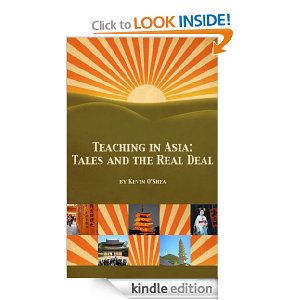
2012 was a year of challenges and small triumphs as well. The biggest milestone for me creatively was completing my first book, "Teaching in Asia: Tales and the Real Deal." I learned a lot about the writing and editing process while penning my first self-published work. I know what I will do differently the next time and how I can make future works much better. I was proud to finish my book and at the same time happy to learn how I could improve my writing and editing process.
I am happy to say that there will be a new book in 2013. I have already begun putting it together. This one will involve a lot of time interviewing people and gathering anecdotal data and stories. This one won't be about teaching in Asia, but in a way will be about teaching. If you have been reading the last few posts here on the "Far Away Blog" you might already have an idea about the topic.
As far as other creative endeavours have gone, I have continued to be active on my YouTube channels and have met some great people through my hobby. In 2013, I plan to continue with my fun video making hobby and hopefully bring it up a few notches.
I can inform all you fine readers out there, if you don't already know, that I will become a father again in 2013. In late spring my wife and I are expecting "little person" number TWO! Exciting and interesting times for sure.
Thank you for taking the time to stop by this blog in 2012 and if you re new to it, welcome.
I hope you all have a safe and happy 2013 and a productive year as well.
You can follow me on Twitter @jlandkev
Sunday, August 26, 2012
Weird Japan: Goya Dry Beer?
Japan is a country known for many things, one of them being strange beverages. Every summer, Pepsi comes out with weird and occasionally wonderful limited time flavours. Breweries make limited time beers and a walk through any convenience store in Japan will leaving you happy and confused while looking at the overall beverage selection.
A few days ago I wandered into a Lawson convenience store here in Kobe and was shocked to see Goya Beer on the shelve. Goya or "bitter melon" in English, is an extremely bitter vegetable that I am not particularly fond of, is used to give the beer a bitter edge.
I chose not to buy the beer. if you dislike goya as much as I do, you probably would have as well.

A few days ago I wandered into a Lawson convenience store here in Kobe and was shocked to see Goya Beer on the shelve. Goya or "bitter melon" in English, is an extremely bitter vegetable that I am not particularly fond of, is used to give the beer a bitter edge.
I chose not to buy the beer. if you dislike goya as much as I do, you probably would have as well.

Since I didn't buy a can, I can't tell you how it tastes. I do however have a coworker who fancies himself a "beer afficiando" and he said it "Tastes like barf!"
If you are wondering, Goya Dry is made by Helios Distillery Co. in Okinawa, Japan.
You can find me on Twitter: @jlandkev
Friday, August 17, 2012
Should I bother learning Japanese?
Recently, I have been writing some posts about raising my son to be bilingual. A lot of you out there have been interested in reading
about this topic. Of course, everything I write are my own thoughts and
opinions. Some of you out there may not agree with the methods we take in my
house to make sure my son speaks both Japanese and English fluently, but you of
course are entitled to your own opinions. I have my own and am pretty confident
about them.
Now, what I have been thinking about lately is my own
language development and how that will influence my son’s language.
My Japanese sucks! That is a very true statement.
I was in South Korea for about five years and now, I am
coming up to that point in Japan. My Korean was MUCH better than my Japanese
is.
Why is my Japanese so terrible? I am lazy. I can make a
million other excuses: “I work in an international school and never hear
Japanese throughout the day.” “I met my wife outside Japan and we have always
communicated in English.” “”When I speak Japanese my left ear gets itchy.” “I’m
really dumb!” (The last two
excuses are only partially true).
At the end of the day, I am a lazy guy. Well, I am not lazy
in general. I work long hours. I work six days a week often. I produce TONS of
online blog/vlog content. I run at least two full marathons a year. I just wrote
a book about teaching. I am not lazy about life. I am lazy about learning
languages.
At this point in my “Japan journey”…wait…not Japan
journey…that makes it sound as if I am a traveler or someone passing through
for a year or two to teach and then move back home.
I am pretty invested in Japan. My wife is Japanese and my
son is half Japanese. My son was born in Kobe and I was there when it happened.
I hope to leave Japan and start our life in Canada within the next couple of
years, but even when we move to Canada, I will always have a foot in Japan. I
will be coming back to visit my wife’s home, to visit my in-laws, to visit my
son’s grandparents and aunt.
What am I getting to with all of this?
Language. Will my lack of Japanese skills work to my
advantage as my son learns English? Will it make my life far more difficult?
I see both things happening.
Don’t get me wrong. I can speak some Japanese and understand
a lot. I probably know as much Japanese as the average 2-3 year old Japanese
child! Problem is, my son is now two and although he speaks Japanese often and
I understand it, within the year his skill level will surpass mine.
Now, when my son speaks in Japanese, I just say “Ah yes.”
And then rephrase what he just said in English. I am able to do that and it
helps a lot. It is a great teaching tool. I never speak Japanese in front of
him (he hears it all day from everyone else), but I understand what he says and
then I help him say it in English.
Eventually I will have trouble doing that. What do I do when
I am alone with my son and he wants/needs something and I don’t understand what
he’s saying to me? That is a legitimate fear I have. When I think about that, I
start thinking it is time to study again.

Then I hear what other foreign fathers in Japan have to say
about the topic.
I have received advice from men who have been here far
longer than I and both speak and do not speak Japanese.
Some fathers who speak little Japanese have told me that their
kids speak English well because of that. Their children were forced to use English
to communicate with their fathers. They knew they couldn’t use Japanese so were
motivated to improve their English.
On the other hand, I have met some foreign fathers who speak
fluent Japanese and said that it caused issues. Their kids knew that they spoke
Japanese well and would understand everything they said in Japanese so never bothered
to practice their English. The father’s Japanese skills made the kids lazy!
Where does this leave me? I dunno. I know I should improve
my Japanese skills simply for myself. I would be happier here if I could communicate
with others more effectively. I know I should...i know I must improve my japanese. That is a no brainer.
BUT.....
As for my son’s Japanese/English language development…poses
some interesting food for thought!
What are your thoughts?
Monday, August 13, 2012
Pepsi Salty Watermelon and Dwarves
Although I tend to find that serious and somewhat controversial topics (or at least ones I am very honest about) get the most views on this blog, sometimes I just have to keep it light and fun. I can't always be serious.
Here are two videos I have made in 2012 about two very odd and distinctly Japanese products. Both deal with beverages and both were fun to make!
This video was sort of a cliched video if you will. Japan is known for many weird things such as strange seasonal flavours of Kit Kat chocolate bars and Pepsi Cola. It is almost a right of passage for all newbie video bloggers in Japan to make videos about these food products. Although I am one of the most grizzled veterans of the Japan blogging scene, I decided I still wanted to make a video about Pepsi Salty Watermelon.

Earlier in the Spring, there was a type of tea sold in Japanese convenience stores that came with a rather odd omakae. "Omakae" is essentially a free gift you get when purchasing something. You can see for yourselves why I thought the free gifts were odd if not a little gross!
Here are two videos I have made in 2012 about two very odd and distinctly Japanese products. Both deal with beverages and both were fun to make!
This video was sort of a cliched video if you will. Japan is known for many weird things such as strange seasonal flavours of Kit Kat chocolate bars and Pepsi Cola. It is almost a right of passage for all newbie video bloggers in Japan to make videos about these food products. Although I am one of the most grizzled veterans of the Japan blogging scene, I decided I still wanted to make a video about Pepsi Salty Watermelon.

Earlier in the Spring, there was a type of tea sold in Japanese convenience stores that came with a rather odd omakae. "Omakae" is essentially a free gift you get when purchasing something. You can see for yourselves why I thought the free gifts were odd if not a little gross!
Sunday, August 12, 2012
Japanese Bicycle Polo
During my 4+ years in Japan I have seen many weird and wonderful things. Bicycle polo was definitely one of them. I saw these guys playing this rather unusual sport a few nights ago while out on an evening run. They were playing in downtown Kobe, Japan.
I'm glad I had my phone with me at the time to capture this odd, but cool looking sport!
You can follow me on Twitter: @jlandkev
I'm glad I had my phone with me at the time to capture this odd, but cool looking sport!
You can follow me on Twitter: @jlandkev
Raising a Bilingual Child - 2 Years Old
This is a follow up to my original blog post about raising a
bilingual child.
If you are a follower of this blog you already are aware of my
situation, but if you are a new reader (and thank you very much for reading), I’ll
fill you in a little on my situation.
I am a Canadian teacher working at an international school in
Japan. My wife is Japanese and we have a two year, one month old son who we are
raising to be bilingual. We want him to be able to speak both Japanese and English.
He is a duwl Canadian/Japanese citizen so we want him to have the skills and knowledge
to function in both cultures/societies.
My son’s language abilities are coming along very well. I am
actually quite surprised at how much he is able to speak and understand in both
Japanese and English. I have worked as a teacher for eleven years and at my current
school there is a day care. I have observed many children who are a similar age
to my son and the majority do not speak as much as my son does. I don’t think he
is a “linguistic prodigy” or anything like that, but I have a few ideas to why he
speaks so much.
First of all, my son is always surrounded by language. Simply
put, my wife talks to him a lot. She speaks to him and very importantly, listens
and responds to him. Although I am not an expert and haven’t studied the topic
a great deal, from my many years as a teacher I have noticed that the children
who have the widest language bases, seem to have parents who engage them a lot linguistically.
Many of the children I have met who speak very little, have parents who tend not
to speak to them much. Also, I have noticed that many children who struggle even
with their native language have parents who “talk at them” ns not “ to them.” They
simple command them around and never really have conversations and listen to their
child’s responses.
My wife is doing a great job at engaging our son. I try my
best as well when I am home, but sometimes my work schedule doesn’t allow me to
be at home as much as I would like.
Another thing that has been working very well is the fact that
my wife is always actively teaching and asking questions to my son. She is constantly
asking him, “What’s this?” Whether they are looking at a storybook, magazine, television
or outside of the house in the “real world”, she is constantly engaging and teaching
him. I basically try to follow her lead. Her form of teaching seems to be working
well so I’m going with the flow!

It has become very clear and to know surprise that Japanese has
become my son’s first language. When he does speak in Japanese I just translate
in my brain and repeat what he said in English. In doing this I have realized that
my own Japanese level is very low and I have to begin studying again so I can attempt
to keep up with my son.
I’m hunting for more English dvds for my son as well. I realize
that listening to any English is good, but I am hunting for ones that can help
him learn meaningful language. Of course, watching English television is not
the best option, but some weeks I work six days and a dvd is better than nothing.
At the moment I am home for the next eight days. This is a
great chance for me to speak a lot to my son. This is a great opportunity for
me to engage my son in English.
I better get going, he’s awake now. Time to talk!
Here is a video blog I shot yesterday morning. It's an unusual style for me. You can follow my son and I during our morning together.
Monday, April 2, 2012
Great Stuff about "Teaching in Asia: Tales and the Real Deal"
A hectic day. A busy day. A sad day. A nice day.
After almost a month's vacation I went back to work today. It was of course hectic because I have gotten used to a schedule that basically involves hanging out with my family, going for a run and working a bit on my book or now, public relations/marketing for my book.
It was a sad because I have been with my young son every day for almost a month. I have watched him grow and develop so much, but now.....back to work. I am not complaining about my job, it's a good one. I just get a little spoiled with so much vacation time.
GREAT day because of two great reviews of my book, Teaching in Asia: Tales and the Real Deal.
An amazing written look at the book on Dimitri's blog. He is a university professor who was based in Japan last year.
Next, a nice review from You Tube video blogger LaurenNIHON:
Saturday, March 31, 2012
3 Ways To Make Yourself Feel Good
I have been living abroad for a long time now. In the past ten years, I have spent nine of them in Asia. As a Canadian who loves Canada a lot, that is a long time to be away from home. Why do I do it? Well, I am a teacher and I teach in Japan. I also have a family here.
When I was in my 20's and unmarried, I was quite a social butterfly. I would spend my nights and weekends hanging out with groups of other single expats living in Korea (lived there for a few years).
In 2012, I find myself in Japan with a family. I am also a runner. Running was something I truly started when I first came to Japan in 2008. After some time in Canada, getting my teaching certification, I let my self go physically. In Korea, I was a fun runner (short distances) and a gym rat. Once back in Canada, I became a student and pub aficionado. I gained a lot of weight.
When I came to Japan to teach in 2008, I told my wife I was going to run a marathon. It was on the "bucket list" so to speak. Months later, I achieved my goal. I ran the Osaka Yodogawa Marathon in 4 hours 44 minutes. It was slow, painful and amazing at the same time. I couldn't wait to do it again. I was hooked. I became a runner. Two years later, I ran the same race sub-4 hours. This year I hope to run it much faster than that!
Long story short....I was an expat runner in Japan.
If you have been living the life of an expat in any country that has a very different culture or language, for some time, you can become lonely. That definitely has been something I have had to deal with from time to time. You miss being able to understand all the conversations around you. You miss the culture, good and bad of your own country. You can become homesick.
I got into podcasts in a big way years ago. Canadian and American podcasts helped me feel a little grounded while living so far from home. They gave me the feeling of still being connected with my own culture in a way.
Once I became a runner I started to listen to some running podcasts. About a year ago I came across a running podcast that honestly, made me happy in so many ways.
I was listening to a show I had been subscribed to or a long time. Dirt Dawg's Running Diatribe is a great running podcast (a GREAT show) by a host named Mike living in Detroit, USA. He had mentioned a show called the "3 Non Joggers" a few times. Eventually I became curious and went home one morning after a run and subscribed to their show on iTunes.
I was immediately hooked. The 3 Non Joggers Podcast became not just my favorite running podcast, but my favorite podcast period.
Let me give you a rundown of why I LOVE the 3 Non Joggers podcast:
1. They talk about running and I am a runner.
2. They talk about running, but that is only about 30-50% of the show. The rest of the show is three hosts having INCREDIBLY funny banter!
3. Russ McGarry...host extraordinaire. A former professional comedian, his delivery is witty, interesting and just damn awesome! He is also an ultra marathoner. He is awesomeness and a half!
4. Gary "the Vale" ... the "Rain Man" of running (referred to that by partners in crime on more than one occasion) is a dead-panned funny co-host sort of guy. He is a sub-3 hour marathoner and 100 mile ultra marathoner. This cat LOVES running and really knows his stuff about the topic.
5. Carl The Mailman ...the other host guy who is not a runner in any way. He is a mailman and funny as HELL! He has a wicked mouth and wicked wit as well! His intelligence shines and is only enhanced by his sharp sarcasm. Oh yeah...he's a creative documentary director as well.
6. The three hosts have an amazing synergy (to use a cliched term from the tech word of the late 90's). Their off the cuff banter leaves me laughing....often in public where the Japanese people stare at me and judge me...judge me harshly.
7. This is a running podcast, but even people who don't run would probably like it. The back and forth between the hosts is enough to leave a smile on the crotchetiest (maybe not a real word) old fart's face!
8. This show got me through some pretty hard long runs while training for one ultra marathon and 2 regular marathons last year (All in order to raise money for tsunami relief here in Japan).
9. The episodes are so funny and fresh that I have been easily able to re-listen to them time and time again.
10. I have learned a lot about ultra running and have almost soiled myself in public on many occasions because the show is so funny!
ah yeah....
11. They like to drink! I like to drink. I am the kind of runner who loves an ice cold beer or three after a 30 km long run. They do too.....yum yum... (well..Carl don't run...or jog....but that's ok).
If you like running and have a sense of humor you should definitely subscribe to the 3 Non Joggers podcast on iTunes. At this point, they have 65 great episodes.
EVEN if you DON'T run...subscribe anyway. They have such a great rapport that you won't even care!


Find these cats on TWITTER here:
3 Non Joggers (Russ)
CarlTheMailman
GaryTheVale
Shameless plug for myself....REMEMBER...you can buy my new eBook "Teaching in Asia: Tales and the Real Deal" from Amazon...NOW....SO DO IT!!!!

When I was in my 20's and unmarried, I was quite a social butterfly. I would spend my nights and weekends hanging out with groups of other single expats living in Korea (lived there for a few years).
In 2012, I find myself in Japan with a family. I am also a runner. Running was something I truly started when I first came to Japan in 2008. After some time in Canada, getting my teaching certification, I let my self go physically. In Korea, I was a fun runner (short distances) and a gym rat. Once back in Canada, I became a student and pub aficionado. I gained a lot of weight.
When I came to Japan to teach in 2008, I told my wife I was going to run a marathon. It was on the "bucket list" so to speak. Months later, I achieved my goal. I ran the Osaka Yodogawa Marathon in 4 hours 44 minutes. It was slow, painful and amazing at the same time. I couldn't wait to do it again. I was hooked. I became a runner. Two years later, I ran the same race sub-4 hours. This year I hope to run it much faster than that!
Long story short....I was an expat runner in Japan.
If you have been living the life of an expat in any country that has a very different culture or language, for some time, you can become lonely. That definitely has been something I have had to deal with from time to time. You miss being able to understand all the conversations around you. You miss the culture, good and bad of your own country. You can become homesick.
I got into podcasts in a big way years ago. Canadian and American podcasts helped me feel a little grounded while living so far from home. They gave me the feeling of still being connected with my own culture in a way.
Once I became a runner I started to listen to some running podcasts. About a year ago I came across a running podcast that honestly, made me happy in so many ways.
I was listening to a show I had been subscribed to or a long time. Dirt Dawg's Running Diatribe is a great running podcast (a GREAT show) by a host named Mike living in Detroit, USA. He had mentioned a show called the "3 Non Joggers" a few times. Eventually I became curious and went home one morning after a run and subscribed to their show on iTunes.
I was immediately hooked. The 3 Non Joggers Podcast became not just my favorite running podcast, but my favorite podcast period.
Let me give you a rundown of why I LOVE the 3 Non Joggers podcast:
1. They talk about running and I am a runner.
2. They talk about running, but that is only about 30-50% of the show. The rest of the show is three hosts having INCREDIBLY funny banter!
3. Russ McGarry...host extraordinaire. A former professional comedian, his delivery is witty, interesting and just damn awesome! He is also an ultra marathoner. He is awesomeness and a half!
4. Gary "the Vale" ... the "Rain Man" of running (referred to that by partners in crime on more than one occasion) is a dead-panned funny co-host sort of guy. He is a sub-3 hour marathoner and 100 mile ultra marathoner. This cat LOVES running and really knows his stuff about the topic.
5. Carl The Mailman ...the other host guy who is not a runner in any way. He is a mailman and funny as HELL! He has a wicked mouth and wicked wit as well! His intelligence shines and is only enhanced by his sharp sarcasm. Oh yeah...he's a creative documentary director as well.
6. The three hosts have an amazing synergy (to use a cliched term from the tech word of the late 90's). Their off the cuff banter leaves me laughing....often in public where the Japanese people stare at me and judge me...judge me harshly.
7. This is a running podcast, but even people who don't run would probably like it. The back and forth between the hosts is enough to leave a smile on the crotchetiest (maybe not a real word) old fart's face!
8. This show got me through some pretty hard long runs while training for one ultra marathon and 2 regular marathons last year (All in order to raise money for tsunami relief here in Japan).
9. The episodes are so funny and fresh that I have been easily able to re-listen to them time and time again.
10. I have learned a lot about ultra running and have almost soiled myself in public on many occasions because the show is so funny!
ah yeah....
11. They like to drink! I like to drink. I am the kind of runner who loves an ice cold beer or three after a 30 km long run. They do too.....yum yum... (well..Carl don't run...or jog....but that's ok).
If you like running and have a sense of humor you should definitely subscribe to the 3 Non Joggers podcast on iTunes. At this point, they have 65 great episodes.
EVEN if you DON'T run...subscribe anyway. They have such a great rapport that you won't even care!

The 3 hosts of the show!

MOI, on my way to complete the first Osaka Marathon. I'm wearing a 3 Non Joggers technical shirt!
Find these cats on TWITTER here:
3 Non Joggers (Russ)
CarlTheMailman
GaryTheVale
Shameless plug for myself....REMEMBER...you can buy my new eBook "Teaching in Asia: Tales and the Real Deal" from Amazon...NOW....SO DO IT!!!!

Tips For New Teachers: Rules and Consequences
Tips for new teachers......
Rules and consequences
As a new teacher it is extremely important that you set very
clear rules from day one with your students. You might want to ask the manager
or owner of your school about this, but normally, one of the best ways to
inform students about the rules is by posting them on the wall. Students will
of course need to be constantly reminded of the rules orally, but a visual
reminder often makes the rules more tangible.
Of course, what would rules be without consequences? You
might not be able to make these up yourself because the school you work in may
have certain policies already in place. On the opposite end of things, you may
find yourself working at a school that is chaotic and prefers not to have rules
for fear of “scaring off students.” The school I talked about in my
“Disorganized School” story was one such school. The owner of that school in
Korea didn’t want us to consequence students in any way, even if their behavior
was bad because he was afraid the school would lose customers. Luckily not all
schools are like that.
The consequences you choose to go with your new rules will
of course have to be fair and not extreme. The most important thing for you as
a new teacher to remember is that you must always maintain those consequences.
Sometimes a teacher may say something like, “If you speak during quiet reading
one more time then you will have an extra homework page.” The student then does
speak again, the teacher tells them to be quiet, but forgets to give the
homework page. Those students, as well as the others in the class, have just
learned something very important about the teacher. They’ve learned that the
teacher’s threats are hollow. From that moment on, the students will continue
to probe and push, seeing how far they can get with their new teacher.
Many years ago, the first mentor teacher I had during a
student teaching practicum in Canada told me, “Kevin, if you talk the talk you
better walk the walk. If you tell students they will have to stay in at lunch
as a punishment, be prepared to give up your own lunch to watch them.” Valuable
words. If the kids in your class (this of course doesn’t apply to adult
learners) know there will always be repercussions for breaking rules, most of
them won’t break the rules or at least not as often.

You can also read an interview with me about self-publishing on the Our Man in Abiko blog! Check it out today.
Wednesday, March 28, 2012
My First Book for Sale!
The day has finally come. After a lot of hard work, a labor of love is complete. After many years of receiving questions from hundreds of readers and You Tube viewers about teaching in South Korea and Japan, I have written a book about it!
If you are interested in coming to Japan or Korea to teach, this is the book for you. Teaching in Asia: Tales and the Real Deal is a great starting out point for your research!
Even if you do not plan to teach abroad, but have an interest in Asia, you may find my stories about life inside and outside the classroom entertaining.

Download it from the Amazon Kindle Store TODAY!
If you don't have a Kindle, you can read it on your PC, Mac, iPhone, iPad or Android device! Download the free Kindle Reader here.
If you are interested in coming to Japan or Korea to teach, this is the book for you. Teaching in Asia: Tales and the Real Deal is a great starting out point for your research!
Even if you do not plan to teach abroad, but have an interest in Asia, you may find my stories about life inside and outside the classroom entertaining.

Download it from the Amazon Kindle Store TODAY!
If you don't have a Kindle, you can read it on your PC, Mac, iPhone, iPad or Android device! Download the free Kindle Reader here.
Saturday, March 24, 2012
The "Teaching in Asia" Home Stretch
Yes folks, we are on the home stretch. Just days away from the release of my first book, "Teaching in Asia: Tales and the Real Deal", I have to admit, I am having trouble sleeping at night. Why am I have this trouble? I suppose that is pretty simple. My mind is racing with thoughts of excitement, nervousness and some anxiety. I have put so much of my energy and free-time into this project and I of course hope it is a success.
I suppose the fact that, as a blogger, my first book will be published period, is a huge achievement itself. Now I know what I am capable of and what I need to do in order to improve. Now I am excited for the next writing project! Hey, if I can write one book, why not another after that? Ideas are already darting around in my brain and I have been jotting down notes.
As I have explained before, "Teaching in Asia: Tales and the Real Deal" is a "how to" guide for people interested in coming to Japan or Korea to teach. it is a great place to start your research. if you are not directly interested in coming abroad to Asia, I think you will sill find the stories entertaining. If you enjoy my writing style and are a regular reader of this blog, then it is basically my blog on steroids!

A question many people ask me is, "Kevin, can I read your eBook if I don't have a Kindle Reader?" Of course you can!
Amazon has a free Kindle reader app for iPhones, iPads, Android devices and of course, PC's and Macs. There is even the Kindle Cloud Reader! If you have a computer, you can read my book!
You can download the free Amazon Kindle readers here: Amazon Kindle Reader
I will be uploading the book to the Kindle Store early next week. If all goes well and there are no technical issues (I have never formatted a book and ePublished before), it will be good to go late next week!
I will make a series of You Tube videos on all my channels and announce it on Twitter, Facebook, Google+ and here of course!
Stay Tuned!
I suppose the fact that, as a blogger, my first book will be published period, is a huge achievement itself. Now I know what I am capable of and what I need to do in order to improve. Now I am excited for the next writing project! Hey, if I can write one book, why not another after that? Ideas are already darting around in my brain and I have been jotting down notes.
As I have explained before, "Teaching in Asia: Tales and the Real Deal" is a "how to" guide for people interested in coming to Japan or Korea to teach. it is a great place to start your research. if you are not directly interested in coming abroad to Asia, I think you will sill find the stories entertaining. If you enjoy my writing style and are a regular reader of this blog, then it is basically my blog on steroids!

A question many people ask me is, "Kevin, can I read your eBook if I don't have a Kindle Reader?" Of course you can!
Amazon has a free Kindle reader app for iPhones, iPads, Android devices and of course, PC's and Macs. There is even the Kindle Cloud Reader! If you have a computer, you can read my book!
You can download the free Amazon Kindle readers here: Amazon Kindle Reader
I will be uploading the book to the Kindle Store early next week. If all goes well and there are no technical issues (I have never formatted a book and ePublished before), it will be good to go late next week!
I will make a series of You Tube videos on all my channels and announce it on Twitter, Facebook, Google+ and here of course!
Stay Tuned!
Wednesday, March 21, 2012
Vacation in Japan
Hey there everyone! I have been on vacation for the past week and a half and luckily have more left. That is one of the perks of working where I work. I work my backside off, but I get more vacation than the average bear.
So what have I been up to lately?
1. Spending quality time with my wife and 20 month old son.
2. Running, Running, Running. I have found my passion again and am putting on a lot of kilometers.
3. Working on my Running VLOG You Tube channel called "RunCauseItsFun."
4. Wrapping up my eBook, "Teaching in Asia: Tales and the Real Deal." (Hopefully out late next week)
5. Not drinking beer. Decided to give up the suds for a few months to lose weight and become a faster runner!
6. Enjoying the dawn of spring in the Kansai area.
7. Beginning to think about the new school year that starts in two weeks.
8. Daydreaming about running goals for 2012 and beyond!
Here are a few pictures from the past week!


So what have I been up to lately?
1. Spending quality time with my wife and 20 month old son.
2. Running, Running, Running. I have found my passion again and am putting on a lot of kilometers.
3. Working on my Running VLOG You Tube channel called "RunCauseItsFun."
4. Wrapping up my eBook, "Teaching in Asia: Tales and the Real Deal." (Hopefully out late next week)
5. Not drinking beer. Decided to give up the suds for a few months to lose weight and become a faster runner!
6. Enjoying the dawn of spring in the Kansai area.
7. Beginning to think about the new school year that starts in two weeks.
8. Daydreaming about running goals for 2012 and beyond!
Here are a few pictures from the past week!

My Steak and Guinness pie creation Saturday night. Every year for St. Patrick's Day I make this.

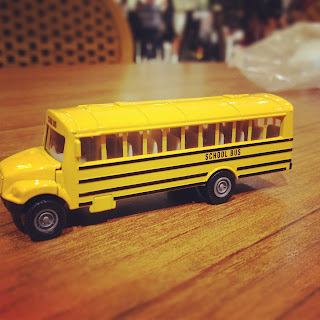
A school bus toy i bought for my son the other day. The little guy is obsessed with vehicles of all shapes and sizes.

In HAT Kobe. This is an area I love to run in. If you look at this picture it is pretty obvious why. I took this while on a run a few days ago.
Thursday, March 15, 2012
Teaching in Asia: Tales and the Real Deal (My FIRST book)
A month has passed since my last post and a lot has happened
in that time. Most of what I have been doing is work related. Teaching and all
of the other administrative things that go along with my job have been keeping
my days and evenings full.
The school year has ended for me and I am beginning to enjoy
a three-week vacation. I plan to stay in Kobe and finish up my biggest personal
project to date.
Now, I haven’t been writing posts for this blog, but I have
indeed been writing, rewriting, editing and revising.
Last summer, while out for a walk during a break at work, I
was reading a blog I follow. I read that the blogger has just published an
eBook about travel. My interest was caught. I went back to work and for the
remainder of my break read about self-publishing. Seemed pretty straightforward
as long as I had something to publish.
I decided I would write a short eBook about teaching in
Asia. I have experience teaching in both South Korea and Japan. I worked as an
ESL teacher for several years and then returned to Canada to get my teaching certification.
After gaining some experience in Canadian classrooms, I then came to Japan where
I have worked as a homeroom teacher at an international school since.
Teaching in Asia: Tales and the Real Deal is a “how to” guide
of sorts. It is mostly for those interested in moving to Asia to teach. It will
definitely be a helpful source of information for university students hoping to
make the move abroad or professional teachers thinking of moving to Japan or
Korea.
The “how to” aspect of the book is only part of it. The rest
is filled with stories from the classroom as well as many stories about adventures
and inspirational moments I have had outside the classroom. If you are a teacher
or thinking of becoming one, Teaching in Asia: Tales and the Real Deal will be
for you. If you simply have an interest in education or life in Asia, you’ll enjoy
it too!
Teaching in Asia: Tales and the Real Deal will be available on
the Amazon Kindle store soon.
For more information about the book, check out the new companion blog, TeachAsia. Loads of informational about the book and the topic are there.
Listen to my Teaching in Asia update podcast on Sound Cloud:

Here is the working cover for the book! Looks great, but there may be some changes in the next few weeks.
Tuesday, February 14, 2012
Life in Japan and Korea: Myth vs Reality
I am not an angry blogger; I promise. I am not a bitter blogger; I mean it. Sure, there is a virtual poop-ton of bitter people who are fed up with living in Asia, but rest assured, at the time I write this blog (meaning never say never) I am not one of them. I am making this clear because I want all you out there reading this post to know that I am not trying to be a grumpy old fart raining on your parade for the sake of being a grumpy old fart.
This blog post is based in reality. I am being a realist. If you are an obsessed Japan or Korea fan you may not want to read what I will write, but tough, this is how it is!
I wanted to address some of the false images people have and false assumptions people make about life in Japan and Korea.
1. If I move to Japan or Korea, my life will be better: Maybe, maybe not. There are millions of factors that will cause this to become a reality or not. Did you come to Asia to teach or live with a massive financial debt hanging over your head or were you running away from a messy divorce? If so, maybe life won't be better for you with a simple geographic change. For many out there though, life does become better.
Simple reasons for this: A massive geographic and cultural change is exciting. It is a sensory overload and an amazing learning experience. Moving to a culture completely foreign and learning to navigate it can be fun. Also, living in a place that may have a deeper history than where you came from may also seem interesting.
2. I want to live in Japan because I love anime and manga: Japan isn't a comic book or a cartoon. it is real and life here is real. It is very different than in Europe and North America, but it is real. People eat breakfast in the morning and go to work. They drink coffee during their coffee breaks and fall asleep with the TV on at night. Life in Japan is certainly cool, but it isn't like a manga or an anime. Sorry!
3. I hear everyone in Japan does Cosplay and I wanna see it: No they don't! To be honest, it is pretty rare to see people doing Cosplay in Japan. It only happens in specific places and only sometimes. Although, as a Canadian, it is interesting and amusing to see people dress up in costumes, it isn't that common. According to my wife and many other Japanese people I have talked to, the regular everyday Japanese person thinks Cosplay is pretty weird. It is a subculture. Sorry folks!
4. If I move to Korea or Japan (some younger readers say this) then I'll never be bullied: ARGH! Please don't think that. Bullying is rampant in these two countries. Their teen suicide rate is through the roof. If you think bullying is bad where you are from, try being pushed to the outside in a group culture!
5. I love Korean dramas and want to move to Korea: Sort of like the anime thing. Life in Korea is interesting, but it is real. Dramas (soap operas in North America) are anything but real. That prince charming way that guys act in those shows...well....they're just TV shows. Nuff said!
6. I really want to move to Japan and Korea because I love the food: Good reason. The food in both countries is outstanding and a fine reason to set up shop there!
7. I wanna move to Korea or Japan cause all the ladies will want me: Did the ladies want you where you came from? If the answer is "No", than maybe you may have trouble here as well. If you go to a club and someone throws themselves all over you right away, either you look like Ryan Reynolds or they've done it many times before. To be honest though, you get a good lady here like you would anywhere else. Be interesting, charming and have some luck on your side!

8. I want to work in Japan or Korea, but I don't want to teach: That is cool. What is skill set though? Do you work for a large multi-national company that will transfer to Japan or Korea. Are you so fluent in the language that you can compete in the local job market? Are you a freelancer who can tele-commute from anywhere in the world? Will you be a language or university exchange student? If not....not sure what you will do?
I lived in Korea and I now live in Japan. They are very interesting countries to call home. They can at times be frustrating though. You will face many of the day to day living problems people all around the world face. You will also get to enjoy many of the benefits of life in such interesting cultures with rich histories.
Follow me on Twitter: @jlandkev
This blog post is based in reality. I am being a realist. If you are an obsessed Japan or Korea fan you may not want to read what I will write, but tough, this is how it is!
I wanted to address some of the false images people have and false assumptions people make about life in Japan and Korea.
1. If I move to Japan or Korea, my life will be better: Maybe, maybe not. There are millions of factors that will cause this to become a reality or not. Did you come to Asia to teach or live with a massive financial debt hanging over your head or were you running away from a messy divorce? If so, maybe life won't be better for you with a simple geographic change. For many out there though, life does become better.
Simple reasons for this: A massive geographic and cultural change is exciting. It is a sensory overload and an amazing learning experience. Moving to a culture completely foreign and learning to navigate it can be fun. Also, living in a place that may have a deeper history than where you came from may also seem interesting.
2. I want to live in Japan because I love anime and manga: Japan isn't a comic book or a cartoon. it is real and life here is real. It is very different than in Europe and North America, but it is real. People eat breakfast in the morning and go to work. They drink coffee during their coffee breaks and fall asleep with the TV on at night. Life in Japan is certainly cool, but it isn't like a manga or an anime. Sorry!
3. I hear everyone in Japan does Cosplay and I wanna see it: No they don't! To be honest, it is pretty rare to see people doing Cosplay in Japan. It only happens in specific places and only sometimes. Although, as a Canadian, it is interesting and amusing to see people dress up in costumes, it isn't that common. According to my wife and many other Japanese people I have talked to, the regular everyday Japanese person thinks Cosplay is pretty weird. It is a subculture. Sorry folks!
4. If I move to Korea or Japan (some younger readers say this) then I'll never be bullied: ARGH! Please don't think that. Bullying is rampant in these two countries. Their teen suicide rate is through the roof. If you think bullying is bad where you are from, try being pushed to the outside in a group culture!
5. I love Korean dramas and want to move to Korea: Sort of like the anime thing. Life in Korea is interesting, but it is real. Dramas (soap operas in North America) are anything but real. That prince charming way that guys act in those shows...well....they're just TV shows. Nuff said!
6. I really want to move to Japan and Korea because I love the food: Good reason. The food in both countries is outstanding and a fine reason to set up shop there!
7. I wanna move to Korea or Japan cause all the ladies will want me: Did the ladies want you where you came from? If the answer is "No", than maybe you may have trouble here as well. If you go to a club and someone throws themselves all over you right away, either you look like Ryan Reynolds or they've done it many times before. To be honest though, you get a good lady here like you would anywhere else. Be interesting, charming and have some luck on your side!

I lived in Korea and I now live in Japan. They are very interesting countries to call home. They can at times be frustrating though. You will face many of the day to day living problems people all around the world face. You will also get to enjoy many of the benefits of life in such interesting cultures with rich histories.
Follow me on Twitter: @jlandkev
Saturday, February 11, 2012
Teaching in Asia....the podcast?
I started playing with something new this eveing. I started to mess around with something called SoundCloud. Basically I can produce quick, on the fly podcasts using my iPhone. I recorded my first episode this evening. I talk about my book "Teaching in Asia: Tales and the Real Deal"
SoundCloud seems pretty freakin cool so far.
Take a listen and let me know what you think. if you like this mini-podcast, I will make more.
SoundCloud seems pretty freakin cool so far.
Take a listen and let me know what you think. if you like this mini-podcast, I will make more.
Subscribe to:
Posts (Atom)


 Posts
Posts